
Loss of smell and taste | Umami

Loss of smell and taste – Anosmia and Ageusia
Research has shown that 1 in 10 people who catch the covid infection have a persisting, long standing loss of smell and taste. Loss of smell, is known as Anosmia, and taste, is known as Ageusia. Many of us take these senses for granted until they are lost. Usually little receptors on the tongue produce saliva, (Salivary Amylase), which in turn, signal messages to our stomach to produce enzymes to help us break down our food. An example of this would be when we smell and taste food and as a result our tummies rumble. This is a direct signal and important relationship and connection between all the different senses involved surrounding all things food.
Long Covid and Post Covid Syndrome is a reality that so many people are experiencing every day. The percentage of people who have to suffer such effects range from 10-35%; and for those who were hospitalised, it can be as many as 85% suffering with Long Covid symptoms..
Those who have unfortunately lost their sense of taste and smell are, as a result, losing their connection to food and the eating process. Some people aren’t enjoying the eating process like they used to. I have found this with some of my clients over this last 20 months or so.
When the interest of eating has diminished because of the loss of smell and/or taste, it is then even more important to find other ways to enjoy the cooking and eating process. Often when I’m cooking, I find as much enjoyment smelling all the different ingredients. However, if your sense of smell has been effected by Long- Covid, or Post Covid Syndrome, it can leave you lacking the motivation when it comes to cooking. Some even have experienced malnutrition as a direct result from losing the desire to eat and eat well.
Using other senses
Food itself, can be a multi sensory experience. We see it, touch it, hold it, smell it, bite it, taste it. We can gain so much pleasure from eating. Eating food that brings us joy helps to trigger and release hormones in the brain, such as dopamine, oxytocin and serotonin, which are pleasure chemicals. A lot of these pleasures come from smelling and tasting our food, and as this is indeed the case, then it is advised to try and ignite other senses to engage, or re-engage with the love of food, cooking and eating in general.
Here are a few tips which focus on other senses:
Concentrate on Crunch. Eat foods that provide texture and crunch to tap into that sense while chewing slowly to aid digestion.
Tap into Touch. Feel the food and connect with it in a tactile way.
Ignite your sight response. Really look at the food in all its colourful glory, knowing the goodness that will come from eating nutritious and delicious foods.
Umami Foods
There are tried, and tested ways, and foods, to help regain or reignite your connection with taste and smell as many foods provide an abundance of depth of flavour.
Let’s take a look at Umami foods. Umami translates to the ‘Essence of Deliciousness’.
Think of a climbing frame up to flavour sensation heaven of sweet, salty, bitter and sour.
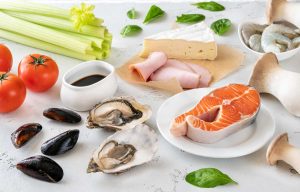
Umami foods to help ignite or reignite your senses and tantalise your taste buds include:
Parmesan cheese
Cured meats
Tomatoes
Peas
Mushrooms
Soy sauce
Potatoes
Carrots
Fish sauce
Shellfish
Miso
Beetroot
There are also acidic options:
Acidity is the core foundation of flavour. Citrus is transformative, adding zing to any dish. The tongues sour receptors fire up more quickly than sweet receptors. For example, orange zest on roast vegetables and a squeeze of lime before serving a home made curry, can elevate it to the next level.
Next level acidic foods include:
Pickles
Wine
Tomatoes
Vinegar
Lemons
Limes
One important aspect to consider is that of stimulating the trigeminal nerve. This is the main nerve between eyes, nose and mouth and is responsible for the tingling sensation we get when we eat certain foods. Foods that trigger this nerve receptors include:
Cinnamon
Wasabi
Mint
Mustard
Horse Radish
I hope you enjoy and reignite your senses with these foods and reconnect to the universal language we all know and love- enjoying good food.
References:
https://pubmed.ncbi.nlm.nih.gov/33962805/
https://www.cedars-sinai.org/health-library/diseases-and-conditions/s/smell-and-taste-disorders.html
https://www.yourcovidrecovery.nhs.uk/managing-the-effects/effects-on-your-body/taste-and-smell/
https://lifekitchen.co.uk
Umami is the Daddy! By Sal Hanvey

Sal Hanvey
About Sal Hanvey
Sal Hanvey is an award winning Nutrition Consultant. She has a real passion for finding ingredient substitutes and alternatives for those people with food intolerances, or allergies, without compromising on nutritional value or taste.
Sal writes for various publications around the subjects of nutrition and well-being. Sal offers ‘Stir Crazy’ cook-a-long classes online to help people to connect, or re-connect to the universal language that we all know and love- to enjoy good food. The classes are interactive, live and very much nutrition led.

Inspire Wellbeing is an all-island charity and social enterprise and their aim is Wellbeing for all. They work together with people living with mental ill health, intellectual disability, autism and addictions to ensure they live with dignity and realise their full potential.